
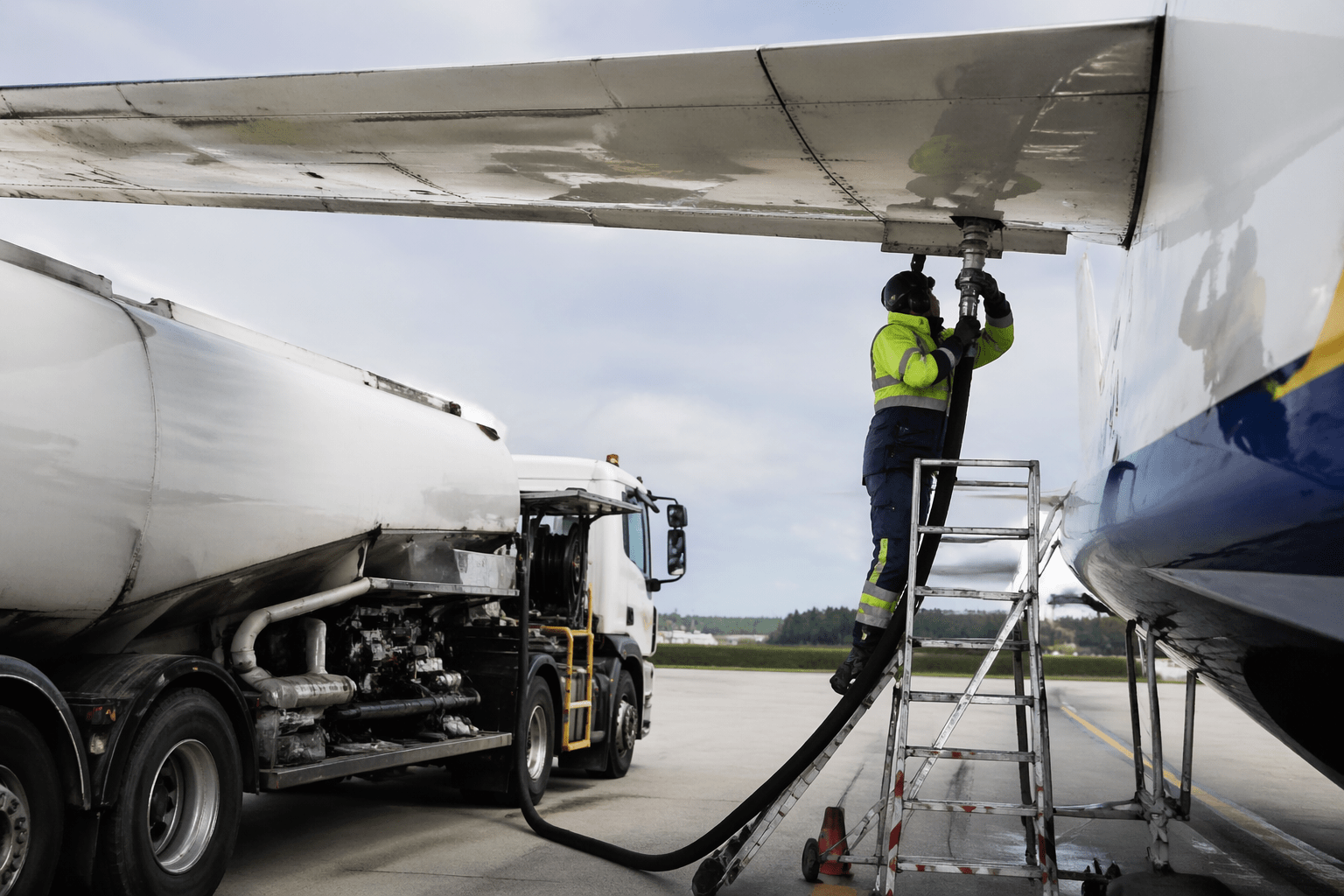
The war in Iran and the resulting closure of the Strait of Hormuz have created an acute shortage in the oil market. But, public attention has mostly been towards crude oil. However, the shortage is even more significant in jet fuel.
The record high price of jet fuel—nearly $1,800 per ton in early April—reflects this trend, with prices having more than doubled at their peak since the start of the war.
Warnings have escalated recently. On April 9, the Airports Council International (ACI) wrote to the European Commission, cautioning that the continued closure of the Strait of Hormuz could lead to a systemic shortage of aviation fuel within three weeks, causing significant harm to the European economy.
Surge in prices and looming shortage warnings
Even after the Strait of Hormuz is operational again, the International Air Transport Association (IATA) projected that it will take several months for jet fuel supplies to recover to the necessary levels.
Last week, the head of IATA warned that fuel shortages could lead to flight cancellations across Europe starting in late May.
The International Energy Agency (IEA) issued a statement echoing this concern, warning that certain European nations might experience jet fuel deficits in the coming six weeks.
Europe is facing a difficult summer due to jet fuel shortages, even in the most optimistic scenario, according to a warning from the European Union Energy Commissioner.
The European Union, according to Dan Jorgensen, is developing measures intended to mitigate the anticipated effect on supplies of jet fuel. “If needed we may redistribute and share jet fuel resources we have,” he stated, indicating potential collaborative efforts.
The blockage is especially severe because the Middle East supplies about 75% of Europe’s jet fuel.
The European jet fuel market is currently facing extreme tightness, as highlighted in a recent special section of the IEA’s monthly report.
Last year, European OECD countries consumed 1.6 million barrels per day of jet fuel. Domestic European refineries supplied 1.1 million barrels per day, leaving a net import requirement of 500,000 barrels per day.
Crucially, 75% of these imports (375,000 barrels per day) historically came from the Gulf region. This essential supply is now cut off due to the blockade of shipping through the Strait of Hormuz.
Finding replacement sources is expected to be challenging. Major alternative suppliers, including South Korea, India, and China, are also likely to have limited jet fuel available for export.
This scarcity is a direct consequence of disrupted crude oil supplies from the Middle East, which has forced a reduction in their refinery output.
US response and low stocks
The US is a major jet fuel producer and has recently become a significant net exporter, with exports increasing sharply.
US Energy Information Administration data showed exports hit a record high of 442,000 barrels per day in early April, with the recent four-week average of 366,000 barrels per day being 200,000 barrels above the five-year average.
The destination of these exports, particularly to Europe, remains unclear.
The US is projected to supply enough additional jet fuel to Europe to cover slightly more than 50% of the jet fuel deficit resulting from reduced shipments from the Gulf region, according to the IEA.
Data from Kpler and LSEG indicate that US jet fuel exports to Europe are estimated to be between 149,000 and 200,000 barrels per day in April. If realised, this volume would mark the highest level recorded in the past 10 years, according to Commerzbank.
The jet fuel supply situation in OECD Europe is characterised by significant import reliance, as highlighted by the IEA. Among the major countries, only Spain is a net exporter, and Turkey is nearly self-sufficient.
In contrast, Germany, France, and Italy can domestically produce only about half of their required jet fuel. The UK, which is Europe’s largest jet fuel consumer, depends on imports for a high 65% of its supply.
Compounding this, the IEA also noted a sharp drop in stock levels; specifically, inventories in the Amsterdam-Rotterdam-Antwerp (ARA) region fell below 600,000 tons in mid-April, reaching a six-year low.
ARA jet fuel stocks, which supply a significant portion of north-western Europe, remained nearly double the usual level in mid-December.
“With the loss of jet fuel supplies from the Middle East and without adequate replacement, stocks are at risk of falling further, particularly as demand for jet fuel is set to rise in the coming months, as is usual for this time of year,” Carsten Fritsch, commodity analyst at Commerzbank AG, said.
IEA scenarios, EU mitigation
The IEA has developed four scenarios projecting the trajectory of European jet fuel inventories, all dependent on the replacement rate of Middle Eastern supplies.
If all Middle Eastern supplies are replaced, or even 90% of them, inventories are expected to meet demand adequately. However, under these conditions, end-of-year stocks would be below the typical range (and significantly below it in the 90% scenario).
The situation becomes more precarious with lower replacement rates:
- 75% replacement: Stocks would be insufficient to meet demand during the peak summer months, posing a shortage risk in August.
- 50% replacement or less: Jet fuel scarcity is projected to begin as early as June.
The EU will present a draft proposal on Wednesday to address the jet fuel shortage and prevent flight restrictions. Planned measures include an EU-wide mapping of oil product refining capacity next month, ensuring full utilization and maintenance of existing capacity, and other steps to improve jet fuel supply.
Officials say the proposals are still being developed. However, the impact may be limited as the IEA indicates many European refineries are already at full capacity.
Discussed options also include ‘optimised’ jet fuel distribution among EU member states.
In all this, it must not be overlooked that the closure or retrofitting of refineries for biofuels has resulted in an estimated loss of 1–1.5 million barrels of daily crude oil processing capacity in Europe since 2015.
“This loss is now being felt acutely.” Fritsch added.
The post Analysis: Why jet fuel is the biggest oil market crisis now appeared first on Invezz