
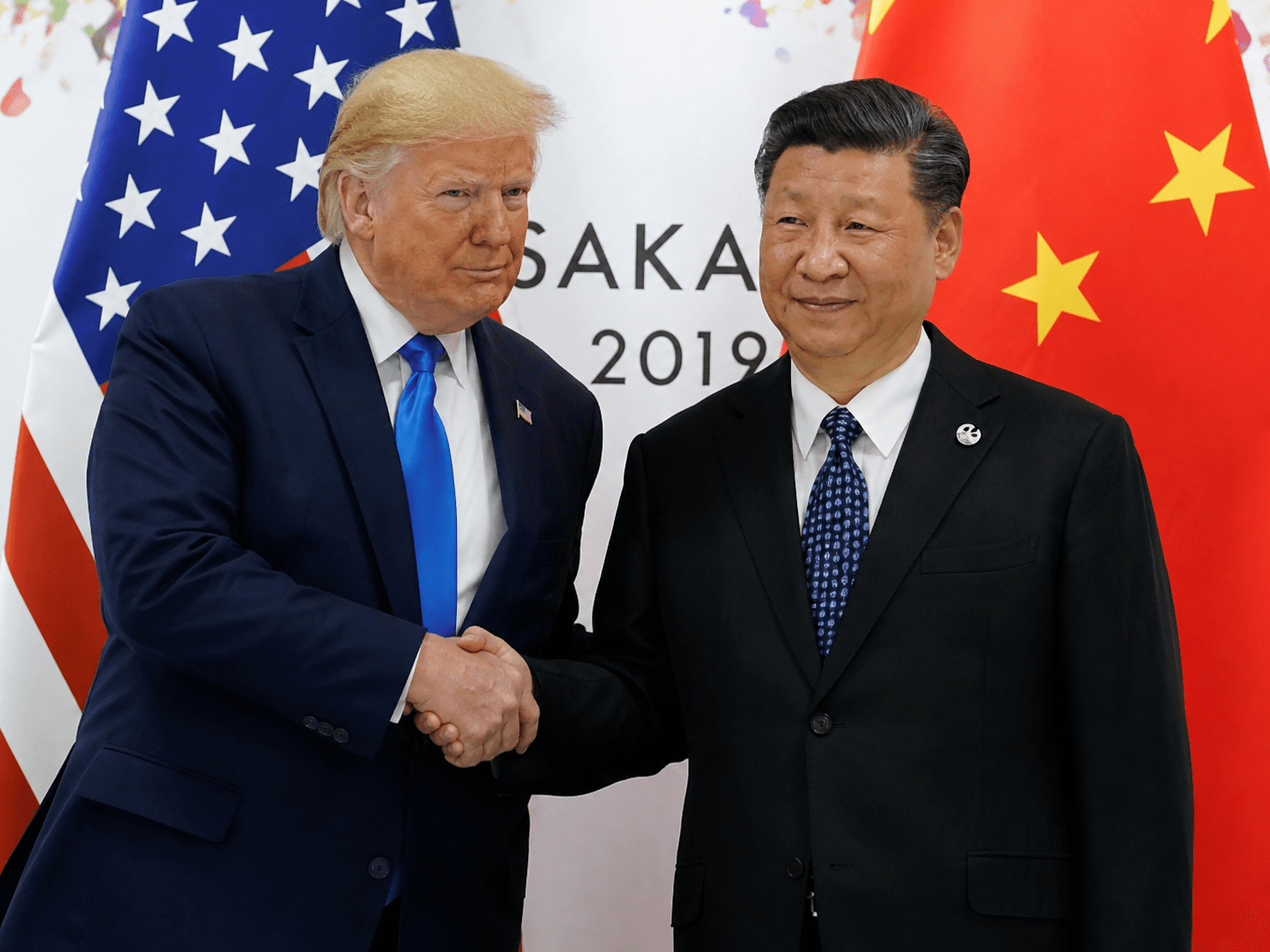
US President Donald Trump is set to meet Chinese President Xi Jinping in Beijing next week in the first visit by a US leader to China in almost a decade, as both sides attempt to stabilise a relationship strained by disputes over trade, Taiwan, technology controls and the Iran war.
The May 14-15 summit comes after months of heightened tensions between the world’s two largest economies, even as both governments seek to avoid a further deterioration in ties that could disrupt global trade and financial markets.
Despite the diplomatic significance of the visit, analysts and China experts say expectations for any major breakthrough remain low.
“Outside observers should have low expectations for the upcoming summit between Trump and Xi,” said Jonathan Czin, Michael H. Armacost Chair in Foreign Policy Studies and fellow, Foreign Policy, John L. Thornton China Center.
“While the relationship has stabilized since the two leaders met last November, it remains fragile—defined more by an absence of friction than any affirmative agenda or deep dialogue on the substantial differences that bedevil the relationship,” he added.
Allen Carlson, a China expert at Cornell University echoed that view in a TIME report, saying:
The chance of anything of substance emerging from these talks is little more than zero.
Still, analysts expect the two sides could announce incremental measures aimed at maintaining stability, including a possible extension of a trade truce reached in October.
Trade and purchases likely to dominate
Trade is expected to feature prominently during the discussions, with Trump under pressure to secure economic concessions from Beijing ahead of the US midterm elections later this year.
According to analysts, both governments are working on a proposed “Board of Trade” mechanism designed to identify sectors where trade can expand without threatening national security or critical supply chains.
Ryan Hass, Director – John L. Thornton China Center said the summit will likely focus on practical commercial agreements.
Both leaders will likely announce Chinese purchases of American products, such as Boeing airplanes and agricultural goods. They also likely will announce a bilateral ‘Board of Trade’ to identify non-sensitive sectors for purchase commitments and limited tariff adjustments.
The proposals under discussion reportedly include large-scale Chinese purchases of US poultry, beef and non-soybean crops, alongside a commitment to buy 25 million metric tons of soybeans annually for the next three years.
China is also said to be in extended negotiations with Boeing over a potential order involving as many as 500 737 MAX aircraft along with dozens of wide-body jets.
Technology and rare earths remain sticking points
Beyond trade, technology restrictions and access to critical minerals are expected to remain contentious.
Beijing has been pressing Washington to ease export controls on advanced semiconductors and chipmaking equipment, arguing the restrictions unfairly target Chinese technology development.
The United States, meanwhile, is seeking greater access to Chinese rare earth exports, which are crucial for industries ranging from electric vehicles to aerospace manufacturing.
China’s tighter controls on rare earth shipments have already caused disruptions for some American manufacturers.
Both governments have also stepped up economic pressure measures ahead of the summit.
Washington in recent months launched investigations into allegations of industrial overcapacity and forced labour practices in China.
The US Treasury Department also imposed sanctions on a Chinese refinery accused of purchasing Iranian oil and warned that Chinese banks facilitating such transactions could face secondary sanctions.
Beijing responded by introducing new regulations granting Chinese authorities broader powers to investigate foreign firms and governments attempting to shift supply chains away from China.
Iran war adds urgency to talks
The ongoing Iran conflict is also expected to feature heavily during the summit.
US Treasury Secretary Scott Bessent has said the two presidents will discuss the war and urged China to “join us in this international operation” to reopen the Strait of Hormuz to global shipping.
The conflict has raised concerns in Beijing over energy security and its ties with Gulf nations, although Chinese officials have been reluctant to appear aligned too closely with Washington’s position.
Chinese diplomats have reportedly been involved in behind-the-scenes efforts to encourage Iran to engage in peace talks with the United States in Pakistan.
Iranian Foreign Minister Abbas Araqchi visited Beijing this week and briefed Chinese Foreign Minister Wang Yi on recent negotiations with Washington.
Taiwan expected to remain flashpoint
Taiwan is likely to remain one of the most sensitive issues during the talks.
During a recent call with US Secretary of State Marco Rubio, Wang described Taiwan as “the biggest point of risk” in bilateral relations and urged Washington to “keep its promises and make the right choices in order to open up new space for China-US cooperation.”
China claims Taiwan as its territory and has not ruled out using force to bring the island under its control.
Taiwan’s government rejects Beijing’s claims and maintains that only the island’s people can determine its future.
People familiar with preparations for Trump’s visit said Beijing has privately encouraged Washington to adjust its longstanding language on Taiwan independence.
The current US position states that Washington “does not support” Taiwan independence.
Chinese officials have reportedly pushed for stronger wording explicitly opposing independence.
Richard C Bush, nonresident senior fellow – Foreign Policy, Center for Asia Policy Studies, John L. Thornton China Center said Taiwan could become entangled with other geopolitical issues.
“It is possible that Taiwan may get crowded out by other important issues: tariffs, export controls, Russia-Ukraine, and especially the war in Iran,” he said.
But the Chinese are signaling that Taiwan cannot be avoided. So, Xi may seek changes in U.S. declaratory policy, including on Taiwan’s legal status. He may ask Trump to impose constraints on American arms sales to Taiwan and then enforce them.
AI dialogue may emerge as new focus
Artificial intelligence is also emerging as a potential area of engagement between the two powers.
The United States and China dominate the development of advanced AI systems, yet official communication between the two governments on AI safety and governance has remained limited amid intense strategic rivalry.
Analysts say the summit could open the door to limited cooperation on AI-related risks.
Kyle Chan, Fellow – Foreign Policy, John L. Thornton China Center said both sides should begin with basic communication channels.
Trump and Xi can begin by opening official communication channels on AI risks, developing nonbinding safety guidelines, and sharing limited information about AI misuse or safety incidents
“Both countries will be wary of agreeing to anything that could tie their own hands. But restarting official dialogue between the United States and China on AI is a crucial first step toward addressing an increasingly high-stakes issue,” he added.
The post Trump-Xi summit: trade, Taiwan, AI talks in focus; major breakthroughs unlikely appeared first on Invezz