
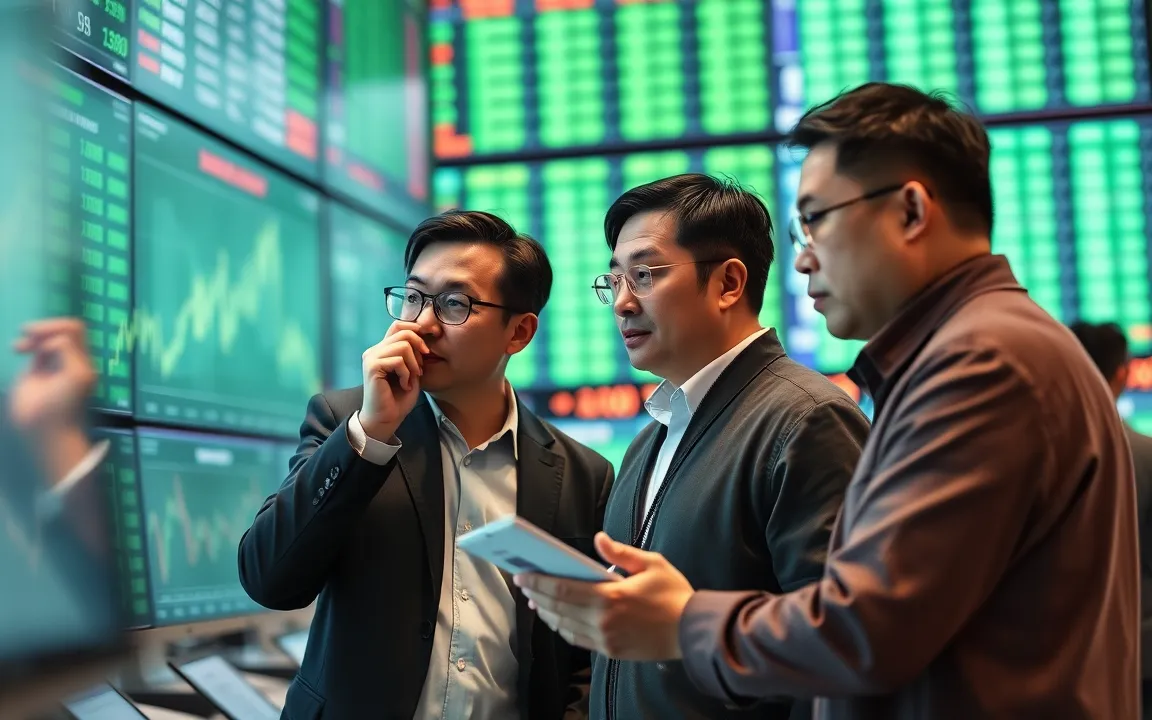
Asia’s hedge fund winners are showing how the artificial intelligence trade has moved beyond the obvious US chip names and into a wider regional supply chain, where local managers have turned early bets on memory, optics and China’s model makers into outsized gains.
Several Asia-focused funds more than doubled investor money in the first five months of 2026, according to return figures.
The advance came even as markets were jolted by the Iran war, higher oil prices and a sharp early-June selloff in technology shares, underlining how powerful the AI theme has become across the region.
A concentrated rally broadens
The biggest returns have come from managers positioned in the less visible parts of the AI buildout.
As per Reuters, WT Asset Management’s China Focus fund gained 103% in the year to the end of May, while its long-only strategy rose 67.5%.
The Hong Kong-based firm benefited from exposure to AI hardware and Chinese technology names, including Hua Hong Semiconductor and Knowledge Atlas, also known as Zhipu AI.
Knowledge Atlas has become one of the clearest examples of investor appetite for domestic Chinese AI firms.
The company listed in Hong Kong in January, and its shares have risen more than 1,000% this year.
Memory trade powers returns
Other specialist investors have captured the same wave through different parts of the stack.
E20 Capital’s Global Opportunity Investment Fund returned 136% in the first five months, helped by positions in memory, optics and CPUs.
Trivest Advisors gained 88.9% over the same period.
The backdrop has been unusually supportive. South Korea’s exports grew at the fastest annual pace in more than four decades in May as chip sales hit a record, according to official trade data.
The country’s KOSPI has also been one of the world’s strongest markets this year, despite a bruising correction in early June that triggered circuit breakers and exposed how stretched the AI trade had become.
Asia’s edge draws more capital
The rally is increasingly reshaping global allocations. Three companies — TSMC, Samsung Electronics and SK Hynix — now make up almost a third of the MSCI Asia Pacific ex-Japan Index, showing how deeply AI-linked hardware has come to dominate regional benchmarks.
For stock pickers, that concentration is both a risk and an opportunity.
The analysts said many Asian AI supply-chain companies remain under-covered by global investors, leaving room for active funds to find mispriced winners.
That is the real attraction for hedge funds. The AI trade in Asia is no longer just about buying chipmakers.
It is about finding the suppliers, memory players, model developers and governance-driven situations that global investors may still be slow to price.
The post AI trade turns Asia hedge funds into year’s biggest winners with 136% gains appeared first on Invezz