
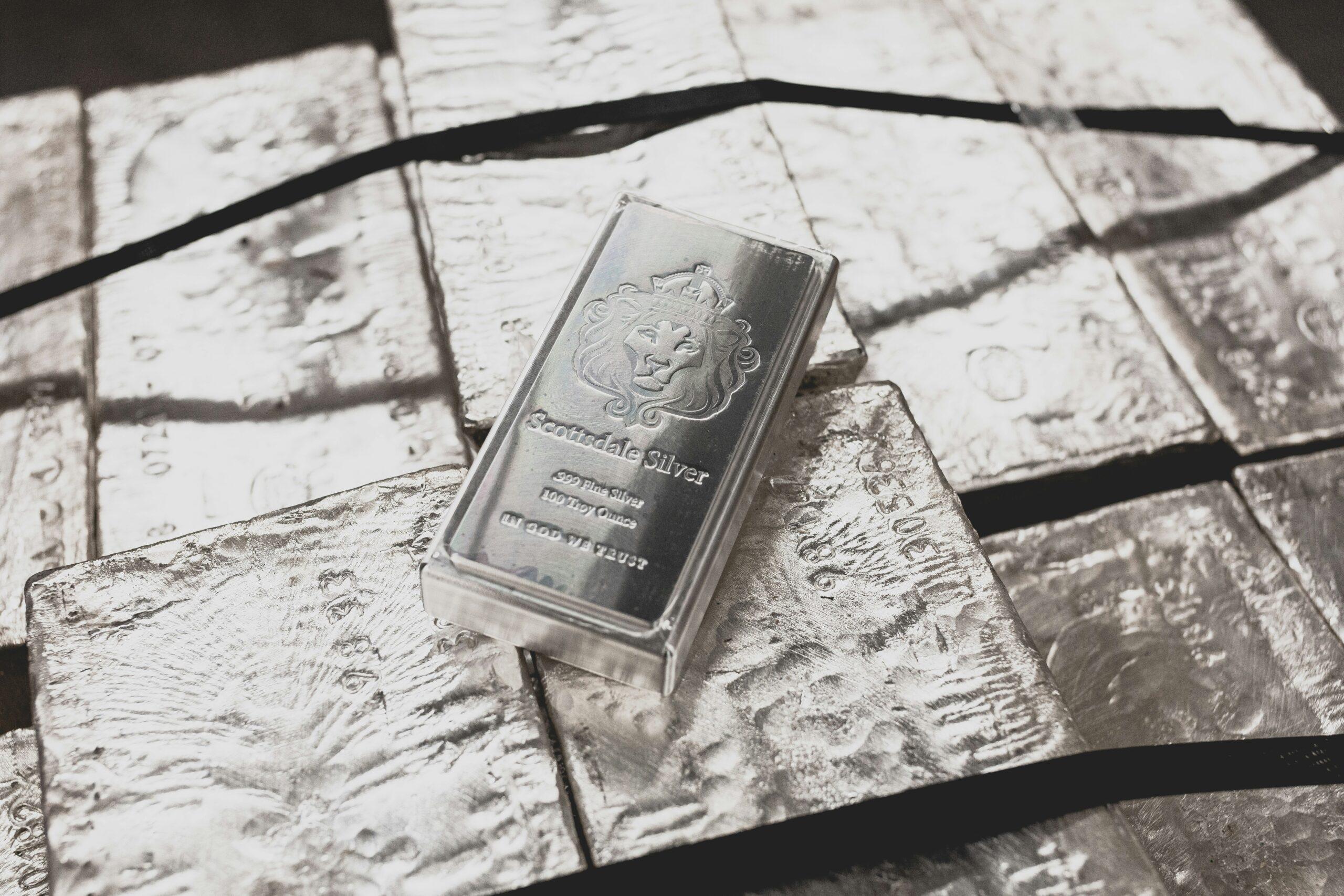
Silver prices continued to decline for a third straight session on Friday, with the XAG/USD pair trading around $64.40 per troy ounce during Asian trading hours.
The decline came as market participants assessed the Federal Reserve’s policy outlook, which remained tilted toward tighter monetary conditions despite easing geopolitical tensions in the Middle East.
Higher interest rates typically increase the opportunity cost of holding non-yielding assets such as silver, making them less attractive to investors.
As a result, traders continued to price in the implications of a hawkish Federal Reserve stance.
Fed signals keep pressure on precious metals
In his debut press conference, newly appointed Federal Reserve Chairman Kevin Warsh reiterated the central bank’s commitment to controlling inflation.
Warsh stated that “price stability” remains the Fed’s ultimate guiding principle.
The comments followed the Federal Open Market Committee’s decision on Wednesday to leave its benchmark overnight borrowing rate unchanged within a range of 3.5% to 3.75%.
While the rate decision itself was widely anticipated, the broader message from policymakers was viewed as hawkish.
Nearly half of the officials indicated that at least one interest rate increase could be necessary before the end of the year.
The prospect of additional monetary tightening weighed on silver prices, as investors reassessed the appeal of precious metals in an environment of potentially higher borrowing costs.
US-Iran developments ease inflation concerns
The pressure from the Federal Reserve’s outlook outweighed support that might otherwise have come from easing geopolitical tensions.
Market sentiment was influenced by developments surrounding the US-Iran peace process.
The United States and Iran signed an initial agreement that initiated a 60-day negotiation period aimed at reaching a final deal to end the conflict.
In a further sign of de-escalation, the US military confirmed that it had ended its blockade on Iranian ports near the Strait of Hormuz.
Officials said millions of barrels of oil were once again moving through the strategically important waterway.
These developments contributed to lower oil prices and helped reduce concerns about inflationary pressures linked to energy markets.
Oil prices retreat as geopolitical premium fades
Oil prices fell again on Friday as traders increasingly priced in the return of crude exports through the Strait of Hormuz following the implementation of the interim US-Iran agreement.
During Asian trading hours, the US benchmark West Texas Intermediate traded in the mid-$75 to $76 range, near its weakest level since before the conflict intensified.
The decline reflected what market participants viewed as a rapid unwinding of the geopolitical risk premium that had previously supported oil prices.
Despite the progress in diplomatic negotiations, investors remained cautious.
Market participants continued to monitor several unresolved issues, including shipping confidence, Iran’s compliance with the agreement, and the future governance of the Strait of Hormuz.
While the easing of tensions has improved risk sentiment and reduced immediate inflation concerns, traders largely expect that it could take several months for global shipping activity and energy flows to fully recover to levels seen before the conflict.
The post Silver prices drop as higher rate expectations dampen demand appeared first on Invezz