
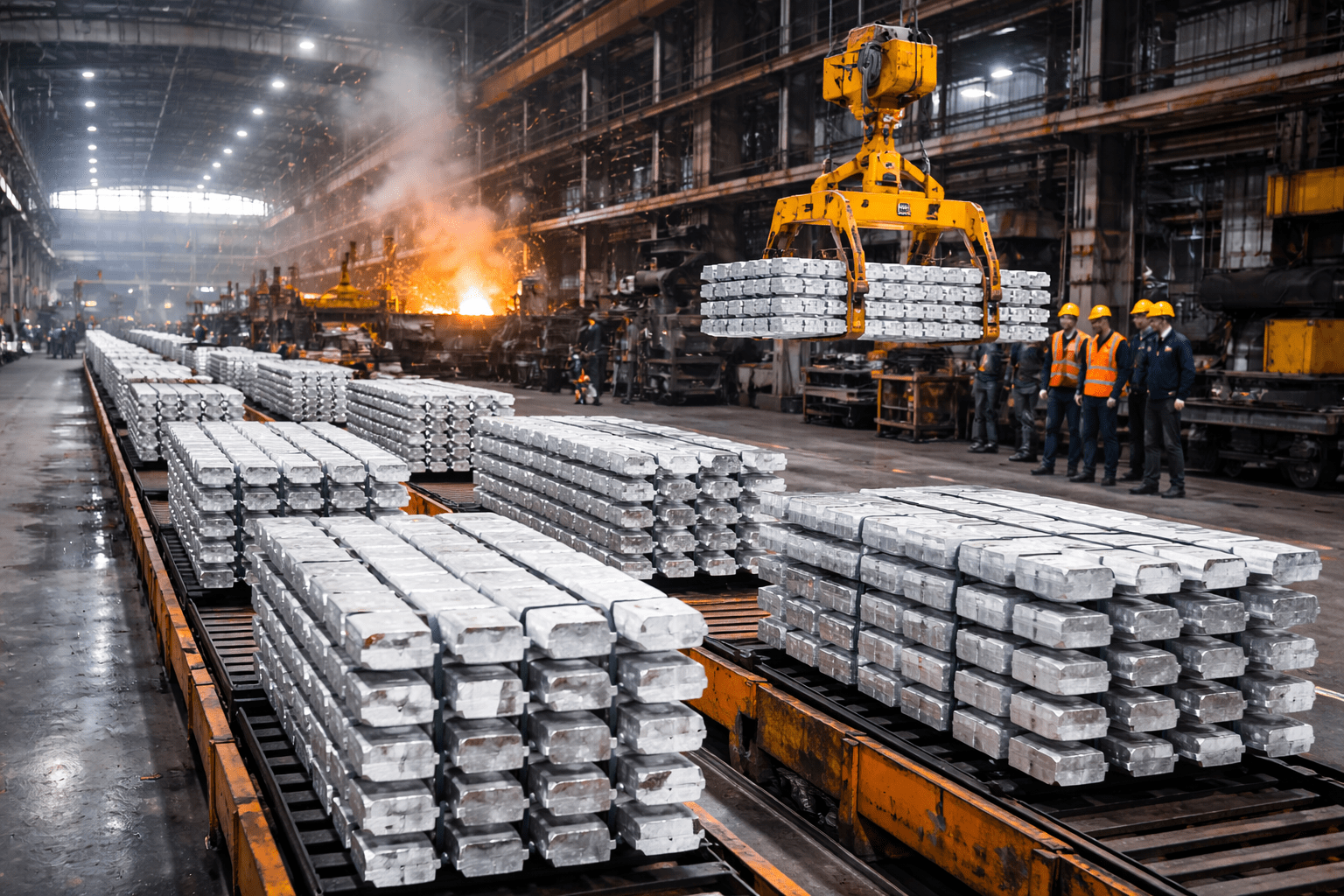
Aluminum is set for its steepest monthly loss since 2008, plunging more than 15% in June as optimism over Middle Eastern supply returning to the market unwinds the rally triggered by war‑related disruptions earlier this year.
The correction reflects both easing supply fears and broader macroeconomic headwinds, including a stronger US dollar and hawkish Federal Reserve policy.
At the time of writing, the three-month aluminium contract on the London Metal Exchange was at $3,091 per ton, up 0.1% from the previous close.
Supply outlook reshapes the market
The sharp decline in aluminum prices has been driven by expectations that Middle Eastern shipments will resume following the interim US–Iran peace deal.
The reopening of the Strait of Hormuz has allowed cargoes to move more freely, reversing the supply shock that had lifted prices in March and April.
The region accounts for nearly 10% of global aluminum output, making its return pivotal for balancing the market.
Record exports from China have added to the downward pressure.
Chinese producers have stepped up shipments, while daring voyages through Hormuz have replenished alumina reserves, further easing concerns about shortages.
The market has flipped into a contango structure, where near‑term contracts are cheaper than later‑dated ones, signaling that supply fears have dissipated.
Investor sentiment and panic selling
The speed of the decline has caught many investors off guard. “Ex‑China premiums dropped rapidly following the news of truce deals, signaling supplies are not that tight anymore,” Peng Dinggui, analyst at Zhongtai Futures, was quoted in a Bloomberg report.
“The rapid plunge in aluminum prices caught many investors off guard. It is causing a bit of panic in the market. Some Chinese investors expect prices to drop further.”
This panic selling has amplified the correction, with speculative positions unwinding quickly.
Traders who had bet on prolonged shortages are now exiting, contributing to the steep monthly loss.
Macro headwinds weigh on demand
Beyond supply dynamics, aluminum has also been hit by macroeconomic factors.
The US dollar has surged since mid‑May, making dollar‑denominated commodities more expensive for overseas buyers.
Expectations that the Federal Reserve will keep interest rates higher for longer, or even raise them further, have weighed on demand outlooks across industrial metals.
Copper, zinc, and iron ore have also softened, reflecting the broader pressure from monetary policy and currency strength.
Aluminum’s decline, however, has been the most pronounced, underscoring its sensitivity to both supply shocks and investor sentiment.
As of June 30, aluminum on the London Metal Exchange was down 15.4% for the month, the steepest fall since October 2008.
Copper fell 2.2% in June, while iron ore dipped slightly to $98.75 per ton in Singapore.
Zinc managed modest gains, supported by expectations of reduced concentrate use by Chinese smelters, though analysts caution that surpluses remain.
Outlook for the months ahead
Analysts expect aluminum prices to remain under pressure in the short term, with supply normalisation and strong Chinese exports weighing on sentiment.
However, structural demand drivers, such as electrification, renewable energy, and lightweight manufacturing, remain intact, suggesting that the longer‑term trajectory could stabilize once the immediate correction runs its course.
For now, the market is adjusting to a new reality: the war‑induced rally has been unwound, supply fears have eased, and macroeconomic headwinds are dictating price action.
The steep monthly loss serves as a reminder of aluminum’s volatility and its vulnerability to both geopolitical shocks and monetary tightening.
The post Aluminium suffers steepest monthly drop since 2008 appeared first on Invezz