
Financial markets sent mixed signals on Tuesday as hopes of a diplomatic breakthrough between the United States and Iran eased concerns about Middle East supply disruptions, dragging oil and gold lower.
Yet investors remained deeply uneasy about another issue entirely: the mounting costs of the artificial intelligence boom.
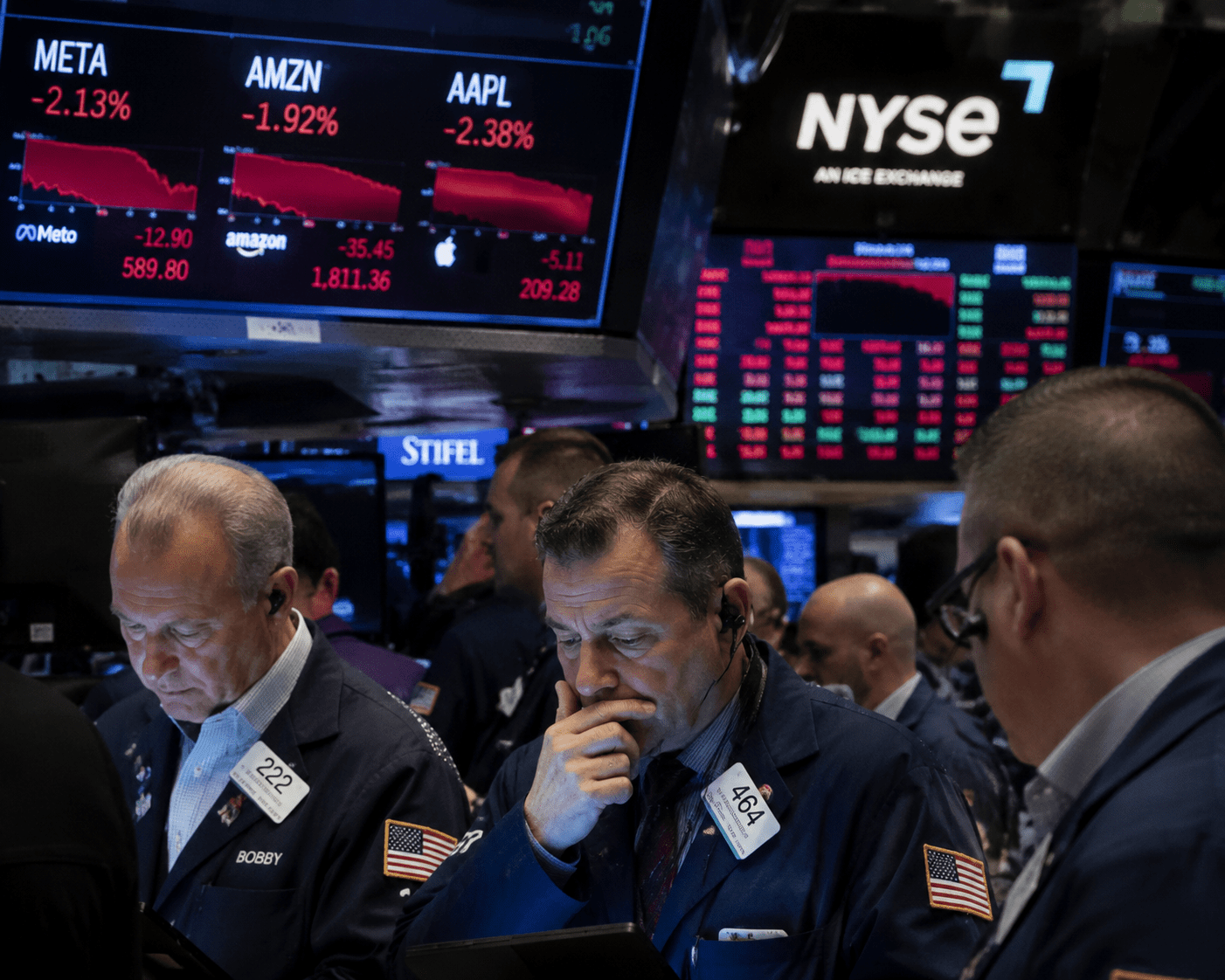
While commodities linked to geopolitical risk retreated, technology stocks and chipmakers across Asia, Europe, and the United States suffered sharp losses as concerns over AI-related spending, rising borrowing costs, and stretched valuations triggered another wave of selling.
Oil and gold retreat as diplomacy gains momentum
Crude prices fell after comments from US Vice President JD Vance indicated that negotiations with Iran had made meaningful progress.
“The final deal is the house,” Vance told reporters on Monday.
“We set the foundation. We haven’t built the house, but we’ve laid a successful foundation to get to a good place for the American people.”
He also suggested Washington could potentially unfreeze Iranian assets for purchases of American agricultural products including soybeans, corn, and wheat.
The remarks encouraged investors to dial back fears of prolonged disruptions to energy supplies in the Middle East.
International benchmark Brent crude futures for August delivery declined 1.57% to $76.68 a barrel, while US West Texas Intermediate futures for August fell 1.53% to $72.73 a barrel.
Iran, however, rejected suggestions that discussions on its nuclear programme had begun.
Iranian parliamentary speaker Mohammad Bagher Qalibaf said the Strait of Hormuz would remain under Iranian management while adhering to international law.
“Hopefully we can activate the strait again, in terms of passage, and bring prosperity back to the regional and global economy,” Qalibaf told Iranian state media while returning from Switzerland.
Gold prices also tumbled, though for reasons extending beyond geopolitics.
Spot gold fell 1.47% to $4,122.99 an ounce, while US gold futures for August delivery dropped 1.4% to $4,144.45
“Gold had received some relief from lower oil prices this week, but it is getting no such favours from the US dollar, which continues to push higher on expectations of Fed rate hikes,” said Tim Waterer, chief market analyst at KCM Trade.
Markets are increasingly pricing in tighter monetary policy.
According to CME’s FedWatch Tool, traders now see an 88% probability of a rate increase in December, up sharply from 61% before the Federal Reserve’s meeting last week.
Bitcoin struggles amid conflicting signals
Cryptocurrencies also failed to benefit from easing geopolitical tensions.
Bitcoin slipped more than 3% to $62,479.80 as investors remained uncertain about the trajectory of US-Iran negotiations.
“US-Iran talks are ongoing, but as usual, the US and Iran sides provided different views over the progress of talks,” Jefferies economist Mohit Kumar said in a note.
The cryptocurrency has remained trapped within a narrow trading range for weeks, with geopolitical uncertainty and expectations of higher interest rates keeping investors cautious.
Technology stocks bear the brunt
If commodities welcomed signs of diplomatic progress, technology stocks were preoccupied by another set of concerns altogether.
A tech selloff that began on Monday gathered momentum overnight, hitting global markets from Seoul to Silicon Valley.
South Korea’s benchmark Kospi led regional losses, ending the session down almost 10%.
Memory-chip giant SK Hynix, which has been one of the biggest beneficiaries of the AI boom, plunged more than 12%.
Alexander Redman, chief equity strategist at CLSA, said markets appeared to be treating increasingly violent price swings as normal.
“It’s unnerving that you’re seeing this kind of volatility,” Redman said at the brokerage’s investor conference in Seoul. “It just feels very, very frothy.”
He added that it was difficult to determine whether the selloff represented a temporary setback or something more fundamental.
“It is hard to say whether this means South Korean shares will bounce back soon or if it is ‘the beginning of the end.'”
Japan’s Nikkei 225 declined 3.55%, snapping an eight-session winning streak.
European equities also came under pressure.
The pan-European Stoxx 600 index fell 1%, while ASML, Europe’s most valuable company, shed around $38 billion in market value within the first two hours of trading after sliding 5.2%.
US futures pointed to another difficult session on Wall Street.
Nasdaq 100 futures fell 2.8%, S&P 500 futures dropped 1.4%, and Dow Jones Industrial Average futures declined by 287 points.
The Nasdaq 100 was on course to erase more than $1 trillion in market capitalization.
Chipmakers led the declines.
NVIDIA fell more than 2.6% in premarket trading, while Intel slid over 7%.
Advanced Micro Devices lost 6%, and Marvell Technology tumbled 8%.
Memory stocks, which have been among this year’s best performers, were also under pressure.
Micron declined 7%, Sandisk dropped more than 8.6%, and Western Digital fell 7%.
AI spending and debt concerns take centre stage
Analysts say investors are becoming increasingly uneasy about the sheer amount of money being poured into artificial intelligence infrastructure and the growing reliance on debt to finance it.
SpaceX, whose shares plunged 16.4% on Monday after unveiling plans for a major bond sale, became the latest example of companies tapping debt markets to fund ambitious AI and infrastructure projects.
Although the stock was flat in Tuesday’s premarket trading, analysts said its borrowing plans had amplified concerns about the broader AI ecosystem.
Ipek Ozkardeskaya, senior analyst at Swissquote, said the company had revived worries that technology firms may be spending too aggressively.
“Seemingly, the recent IPO did not suffice to assuage the company’s funding needs, a reminder of how much money may still be burned on the way to Mars,” she said.
Ozkardeskaya added that Morgan Stanley expects global AI-related borrowing to exceed half a trillion dollars this year, making corporate bond markets increasingly dependent on the AI theme.
The concerns are spreading across the market because hyperscalers such as Alphabet, Amazon, Microsoft, Meta, and Tesla have collectively committed hundreds of billions of dollars to expanding AI infrastructure, even as investors continue to seek clearer evidence that those investments can generate adequate returns.
Alphabet fell more than 1.6% in premarket trading, Tesla lost over 2%, while Apple, Meta, and Amazon also traded lower.
Joachim Klement, investment strategist at Panmure Liberum, said valuations had become stretched.
“We have seen tech stocks go vertical and become very overbought. What we’re doing now is getting rid of that overbought situation,” Klement said.
He warned that the correction could become more painful if investors increasingly question whether massive AI spending is sustainable.
“I think a lot of the selloff is also triggered by SpaceX. A lot of retail investors have taken profits, and this news about additional debt piles onto concerns around fundraising across hyperscalers,” he said.
With geopolitical fears easing but questions over AI spending intensifying, investors now face a market increasingly driven less by war and diplomacy and more by whether the technology industry’s biggest bets can ultimately justify their enormous price tags.
The post AI stock selloff deepens despite Iran peace hopes even as oil, gold prices fall appeared first on Invezz