
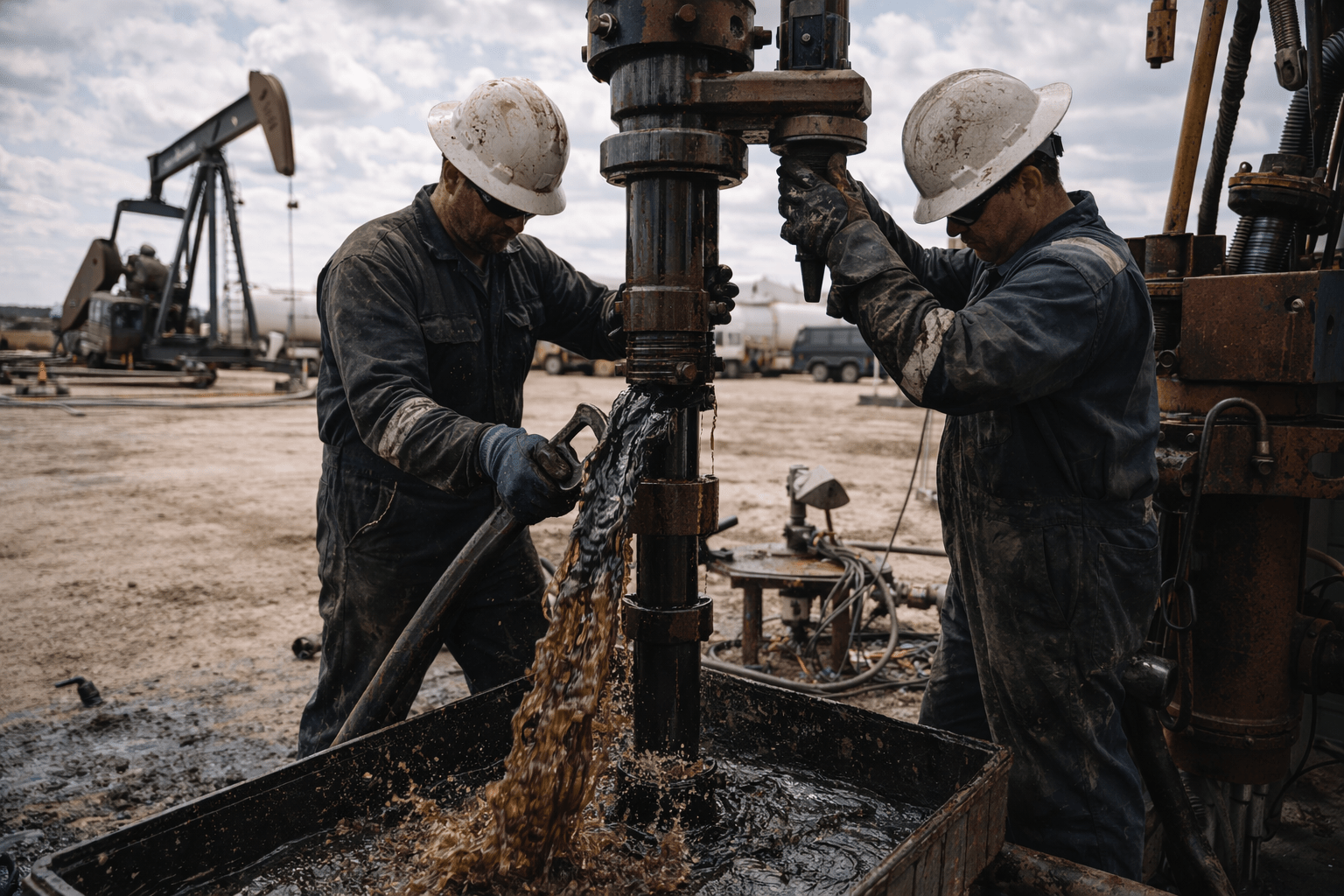
Crude oil has had a dramatic couple of days with prices hitting a more than three-year high on Monday, and plummeting 7% to briefly trade below $90 per barrel on Tuesday.
Both the West Texas Intermediate and Brent crude oil plunged as US President Donald Trump said that the war in the Middle East with Iran could end soon.
Meanwhile, gold prices surged 2% due to a weaker dollar and expectations of the war ending in the Middle East.
Silver prices on COMEX also jumped over 6% and were trading close to $90 per ounce at the time of writing.
Among base metals, copper prices were once again back above the $13,000 per ton mark, while aluminium was slightly lower on Tuesday.
Oil sinks 7%
Brent crude is once again trading around $92 per barrel, the same price it reached on Friday. Similarly, WTI is also back at $88 per barrel.
Both benchmarks had risen to more than $119 per barrel on Monday in a historic surge.
The oil market faced a surge in prices due to fears of an extended blockade of shipping through the Strait of Hormuz. Such a disruption would indefinitely cut off approximately one-fifth of the global oil supply.
Monday evening brought a shift: Trump announced in a television interview that the war objectives were nearly met and the conflict would conclude imminently.
When questioned about the possible closing of the Strait of Hormuz, he stated his intent to “take it over” to guarantee the flow of shipping traffic.
“One can only speculate about the motive behind these statements, as there is no sign of Iran’s unconditional surrender so far,” Carsten Fritsch, commodity analyst at Commerzbank AG, said in a report.
The Revolutionary Guard Corps of Iran has once again asserted its commitment to blocking the transport of oil through the Strait of Hormuz. This resolve remains firm as long as attacks by the US and Israel persist.
“Trump’s statement may have served primarily to calm the oil market. In view of the price developments of the last few hours, this has been successful, at least for the moment,” Fritsch added.
Despite the ongoing fluidity of the situation, Goldman Sachs is maintaining its oil price forecast for the fourth quarter of 2026, keeping Brent crude at $66 per barrel and WTI at $62 per barrel.
Gold recovers, silver surges
Gold has regained some ground after US President Trump signaled an imminent end to the war in Iran.
“This can be explained primarily by a decline in interest rate expectations, which had previously risen due to fears of inflationary consequences of increased energy prices,” Thu Lan Nguyen, head of FX and commodity research at Commerzbank, said in a report.
“Since the start of the war, one interest rate cut by the US Federal Reserve by the end of the year has been priced out.”
Central banks are unlikely to respond much faster to inflationary risks, even though they have seemingly learned from the 2022 energy price shock, which caused inflation to surge more significantly than anticipated, according to Nguyen.
Given the massive political pressure to lower interest rates, the US Federal Reserve will likely consider this factor.
“For this reason, we consider gold prices to remain well supported over the medium term,” Nguyen added.
Gold and silver became cheaper for investors holding other currencies as the dollar dropped 0.6% to a one-week low on Tuesday. Additionally, the cost of holding bullion decreased as the benchmark 10-year US Treasury yields eased.
Focusing on the US Federal Reserve, investors anticipate the central bank will hold interest rates steady at its upcoming two-day meeting concluding on March 18.
According to the CME Group’s FedWatch tool, the first rate cut of the year is projected to occur in July.
The COMEX gold contract was last at $5,223.79 per ounce, up 2.4%, while silver was at $89.853 per ounce, up 6.2% from the previous close.
Base metals
Aluminium is currently trading in London at around $3,395 per ton, relatively unchanged for the day, as the market recovers from an Asian session dip.
This rebound follows a dramatic drop when Middle East supply fears, particularly surrounding Hormuz disruption, were being priced out, according to Neil Welsh, head of metals at Britannia Global Markets.
The metal had fallen to a low of $3,265, a nearly 8% decrease from Monday’s peak of $3,544 per ton.
Meanwhile, copper ore production in Congo has surged in recent years, now representing approximately 14% of the global supply.
This positions Congo behind Chile (23%) but ahead of Peru (10%). Due to the high copper concentration of the ore found in Congo, the country utilises the solvent extraction and electrowinning (SX/EW) method.
This process necessitates the use of sulfuric acid in an initial stage, according to a Commerzbank report.
The Democratic Republic of Congo, along with other African nations, must import sulphur or sulphuric acid for copper ore mining because local copper processing capabilities are not sufficiently developed.
“As the Gulf region is a major producer of sulphur, which is currently unable to reach world markets due to its location on the Strait of Hormuz, there could be production problems for copper ore in the Congo in the coming weeks,” Volkmar Baur, FX and commodity analyst at Commerzbank said.
The post Commodities wrap: oil plunges as Trump signals Iran war end, gold rally appeared first on Invezz